Northeast series: Zee 103 (1986-1988)

Northeast series: Zee 103 (1986-1988)
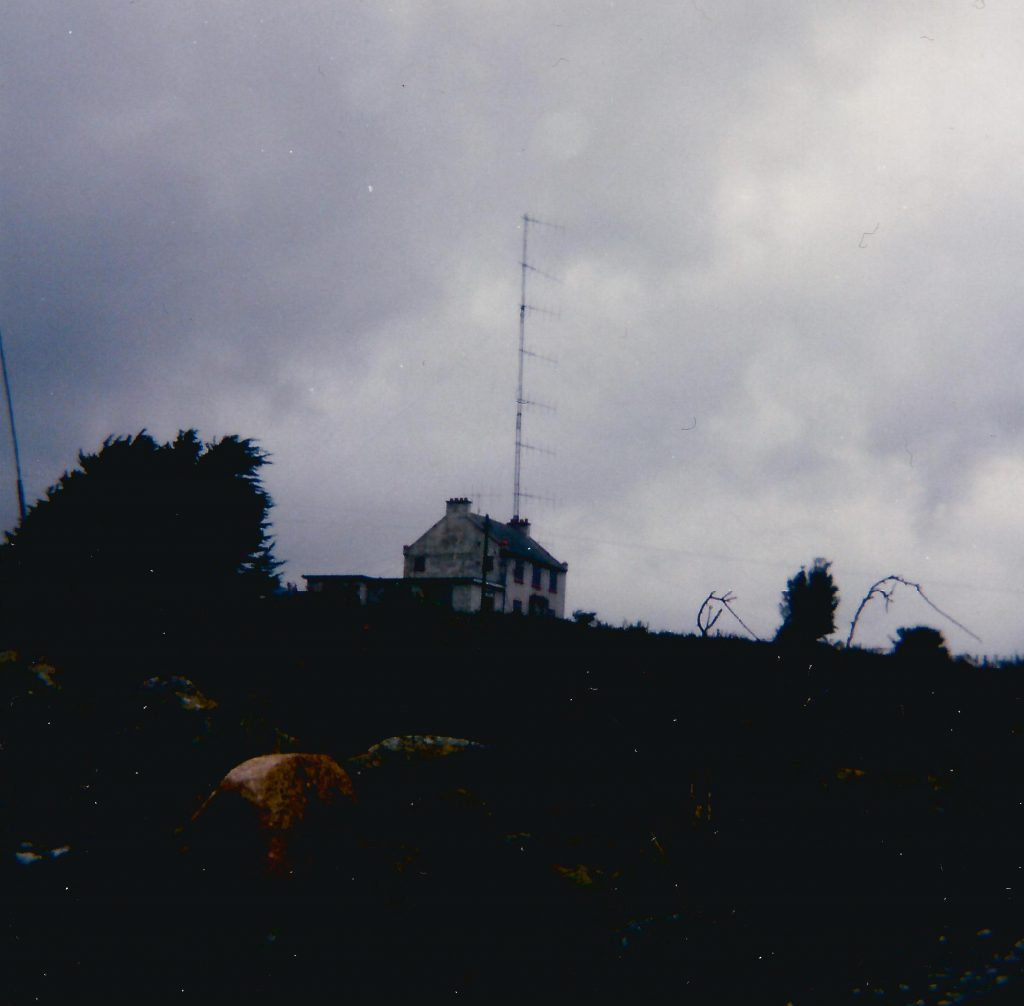
Ardaghy House in Omeath where Zee 103 was based (photo courtesy of Paul Graham).

Zee 103 was a high-powered FM ‘border blaster’ aiming its signal from Co. Louth into Northern Ireland. This station history has been written by Ian Biggar.

Kiss FM was set up to show that there was a need for local radio in the Craigavon area of Co. Armagh. It commenced daily transmissions on 102.7 MHz from a unit on an industrial estate in Lurgan on 13th March 1985. The station proved popular with listeners, but not with the authorities. After only a couple of weeks the British Department of Trade and Industry (DTI) raided the station and effectively put it off the air.

Following the DTI raid, the team decided the only way to continue was by setting up across the border and aim the signal northwards. According to Anoraks UK, KISS FM was heard testing from Omeath on 103.5 MHz during November 1985, but then seemed to disappear. Meanwhile, a site was found near Omeath and work was carried out to renovate Ardaghy House, an old schoolhouse located just 3km from the border and some 600 feet above sea level. The location provided stunning views of Carlingford Lough and was of course an excellent site for radio transmission. Two studios were built and a mast erected at the side of the building with eight six-element yagis mounted to boost the signal. A 2.5 KW Italian transmitter was installed. You can hear a test transmission of KISS FM from Omeath here.
KISS FM test transmission on 23rd November 1985 (courtesy of Ian Biggar).
Northeast series: Zee 103 (1986-1988)
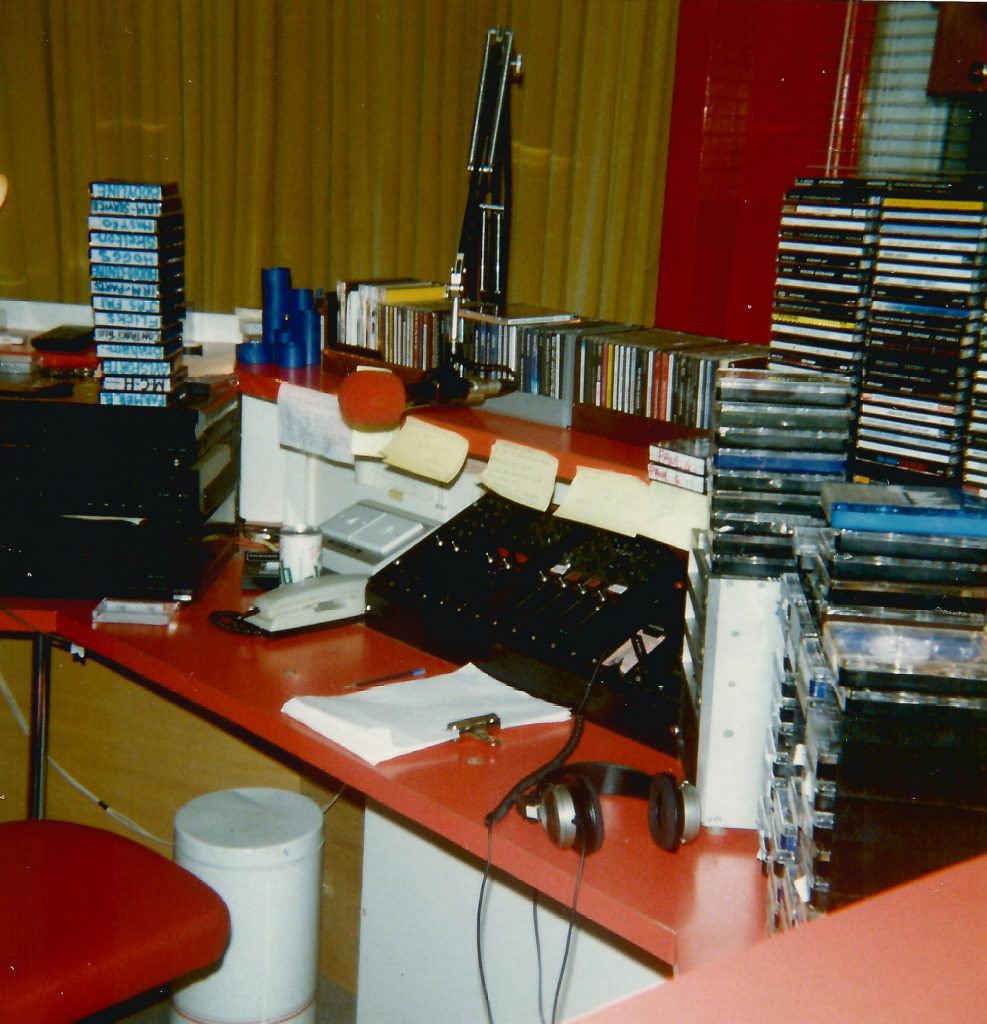
The Zee 103 studio (photo courtesy of Paul Graham).

The station was then hit by what seemed to be a combination of political manoeuvrings and a burglary on site with the loss of much equipment. The internal politics caused some of the team to move on and begin planning an even bigger ‘border blaster’, namely 103.7 KISS FM in Monaghan town. All this caused delays in getting the Louth station on air. The late Frank McCarthy eventually succeeded in preparing the new station to go on air, with major financial backing from a Lurgan-based drinks company.

It was early October 1986 when Anoraks UK reported a big signal on 103.3 MHz with non-stop music tests. Output power was estimated in the region of 150 KW and indeed signals were being reported in Blackpool and Ayrshire in Scotland. At one point the frequency was adjusted to 103.25 MHz. Around 15th October the station began to identify itself, not as KISS FM, but Zee 103.3. A number of long breaks were noted during the tests, believed to be caused by power cuts in the area. Reception reports were requested, firstly to a PO box number in Portadown and then to the station address in Omeath. Testing continued, with Anoraks UK noting that the audio sounded distorted at times.
Northeast series: Zee 103 (1986-1988)
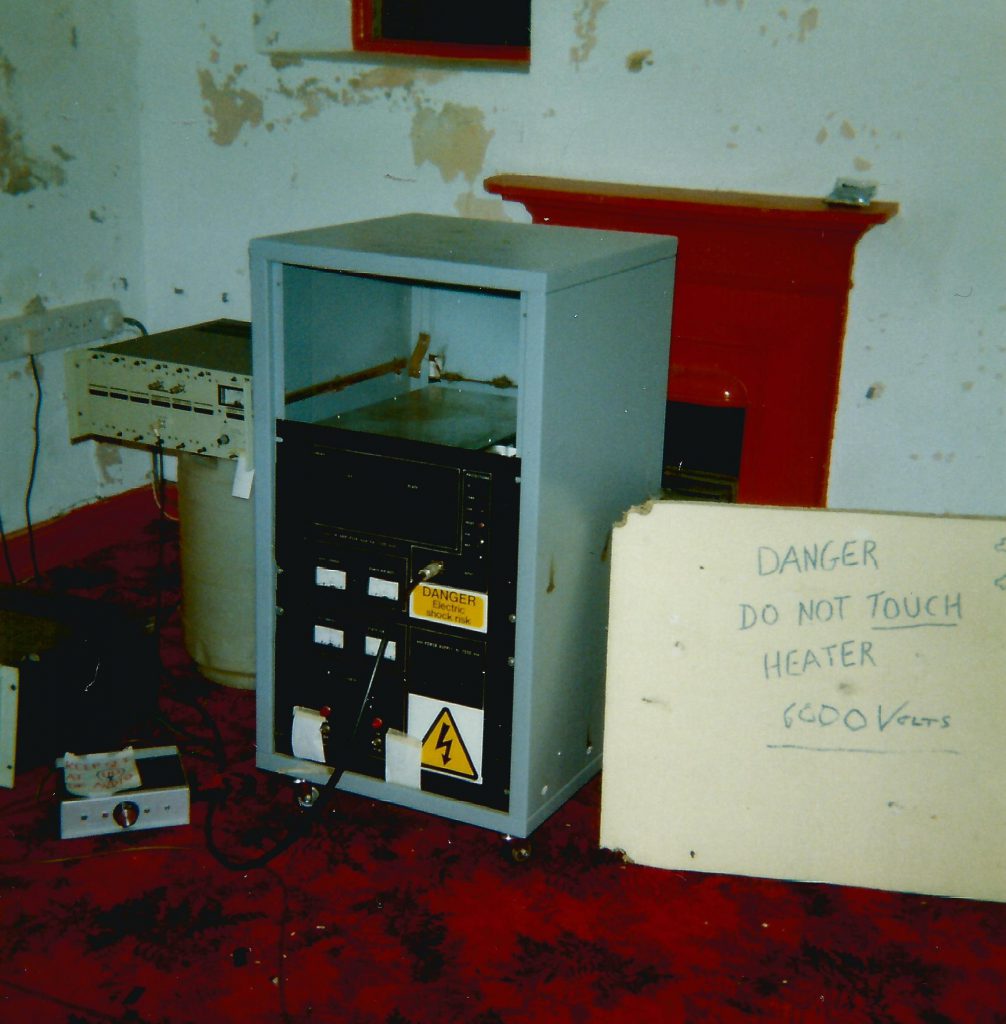
Zee 103’s CTE transmitter (photo courtesy of Paul Graham).

The station commenced regular programming on 11th November 1986 at 0700 with Donagh McKeown hosting the opening programme. A 24-hour schedule commenced from day one with a full team of presenters including Owen Barry (Larkin), Kenny Tosh and Andrew Gold. Later an hourly news bulletin was introduced during the daytime. The station provided a good stereo signal into mid-Ulster, easily covering Newry, Portadown, Lurgan, Armagh and the surrounding area. Unlike other border stations, Zee 103 programmed mainly contemporary hits, although there were specialist weekend programmes featuring oldies and a reggae programme hosted by Terri Hooley from Good Vibrations records in Belfast.

In the early days the power seemed to vary considerably and the station still suffered from over-modulation at times. However technical issues were soon resolved and the signal became consistent. During January 1987 the station adjusted its name slightly to Zee 103 and began using jingles produced by Henry Owens. In February a promotions team was on the streets of towns in the coverage area, giving away £5 notes to anyone who said they listened to Zee 103, ‘the sound of tomorrow today’. The station also had a £1,000 cash giveaway during the summer of 1987.
Northeast series: Zee 103 (1986-1988)
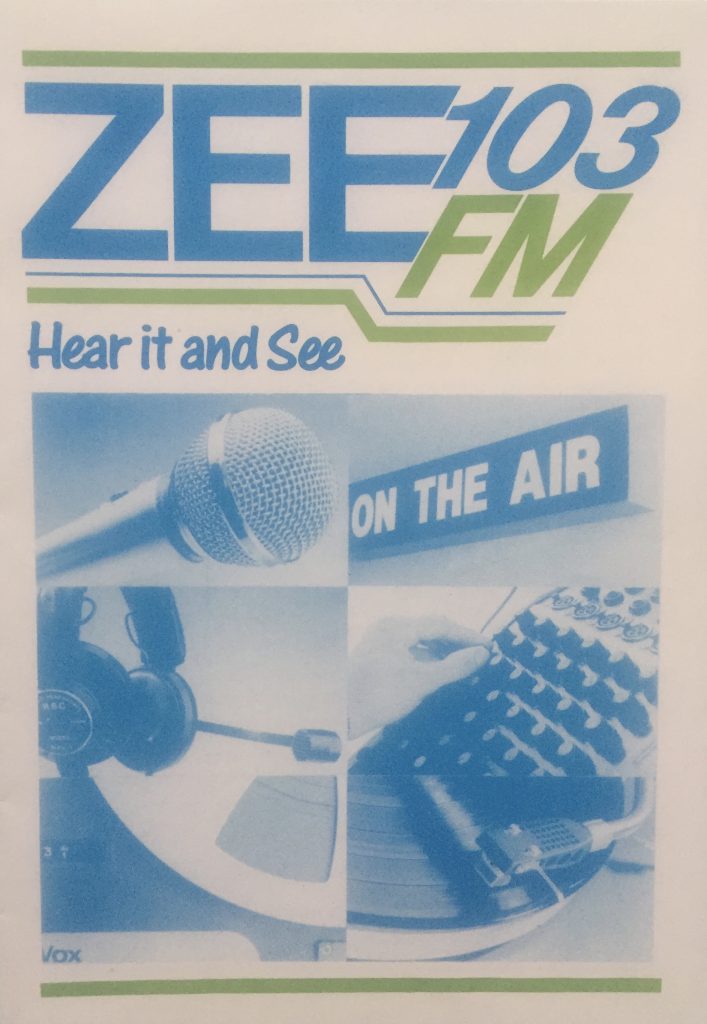
The cover of a station advertising brochure (courtesy of Ian Biggar).

The recording above is of a test tranmission for Zee 103 on 4th November 1986 from 103.25 FM. It was made by Ian Biggar in Scotland. The recording below was made by Rodney Neil in Portadown and is of the station’s official launch on 11th November 1986. It runs from 0730-0900 and features the first breakfast show with Donagh McKeown.

Zee 103 built up a good, solid listening audience, mainly covering the younger demographic who were less likely to want country music as prominently heard on most stations in the area. It continued to broadcast 24 hours a day until finally closing at 2359 on December 31st 1988, following the introduction of the Wireless Telegraphy Act. However, on seeing that the likes of Radio Star Country continued despite the new law, Zee 103 ventured back on air on 19th January 1989 and started broadcasting around the clock once again. However following the first raid on Radio Dublin and the uncertainty it brought, station management decided to close and so Zee 103 left the air at 1200 on Tuesday 7th February.
Northeast series: Radio Rainbow International (1985-1986)

Northeast series: Radio Rainbow International (1985-1986)
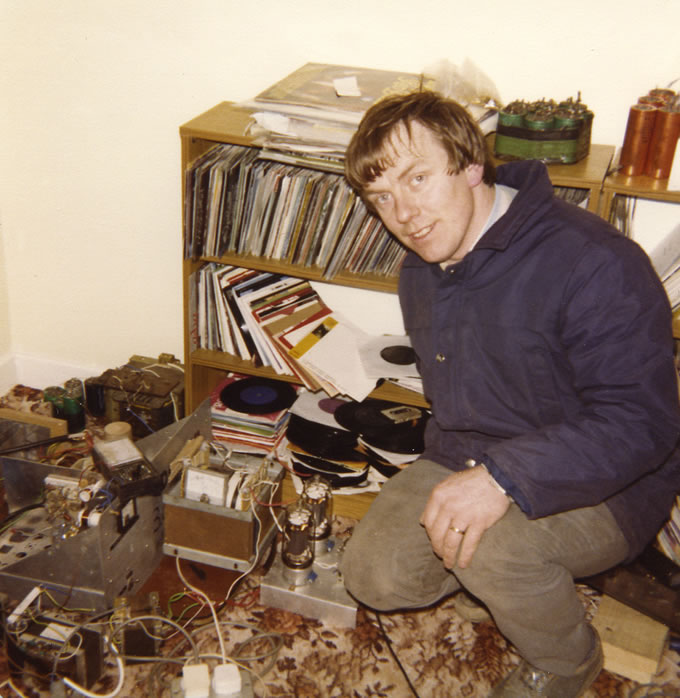
Eddie Caffrey with the Radio Rainbow International transmitter (photo courtesy of Kieran Murray).

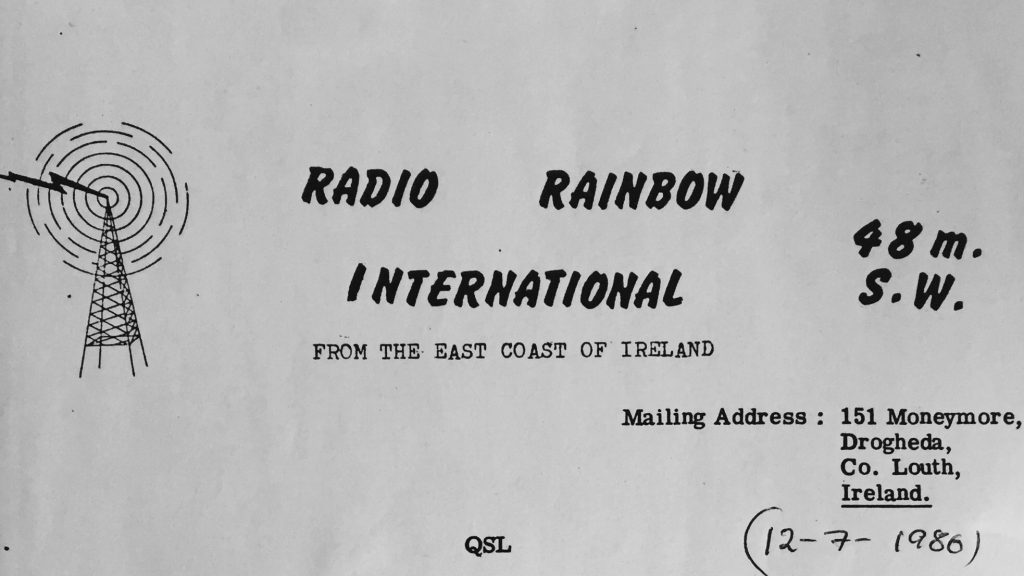
Radio Rainbow International was a high-powered shortwave pirate operated by Boyneside Radio DJ and engineer Eddie Caffrey from the summer of 1985 until the end of 1988. It was first logged by Anoraks UK in the west midlands on 21st July 1985 on 6240 kHz with a strong signal and continued to be heard regularly on Sunday mornings from 1000-1300 for the next three and a half years. In contrast with other shortwave pirates from Ireland operating on low power, Radio Rainbow International put on a transmitter of more than 1 kW with plenty of compression and modulation. Reception reports were received from all over Europe and from as far away as Russia. As well as Eddie Caffrey, other Boyneside DJs Jim Agnew and Kieran Murray were also involved, with Kieran presenting a popular weekly FRC show giving the latest news about the Irish radio scene. In an interview with Pirate.ie, Kieran described Radio Rainbow as the ‘Radio Nova of shortwave’, such was its large coverage area.

Northeast series: Radio Rainbow International (1985-1986)
Radio Rainbow logo as seen on a QSL from 1986 (courtesy of Ian Biggar).

As well as shortwave, Radio Rainbow broadcast on 1521 kHz AM with up to 1 kW output and there were also local FM broadcasts. From 1987 onwards, the station relayed the output of other pirates such as WLR in Scotland and Radio Sovereign in London. In 1988, Eddie Caffrey also relayed another UK station, Radio Fax, on 6220 kHz by day and 1611 kHz by night from another transmitter in the Drogheda area. You can hear an interview with Eddie about his involvement with shortwave stations here.  

The recording above is part of Kieran Murray’s FRC show from 6th April 1986. Below is a recording of Jim Agnew from August 1985 reading out a reception report from West Berlin.

The second clip below is of a Radio Rainbow jingle and multilingual station idents in French and German.

We thank Eddie Caffrey for sharing these recordings.

Northeast series: Boyneside Radio (1985)

Northeast series: Boyneside Radio (1985)
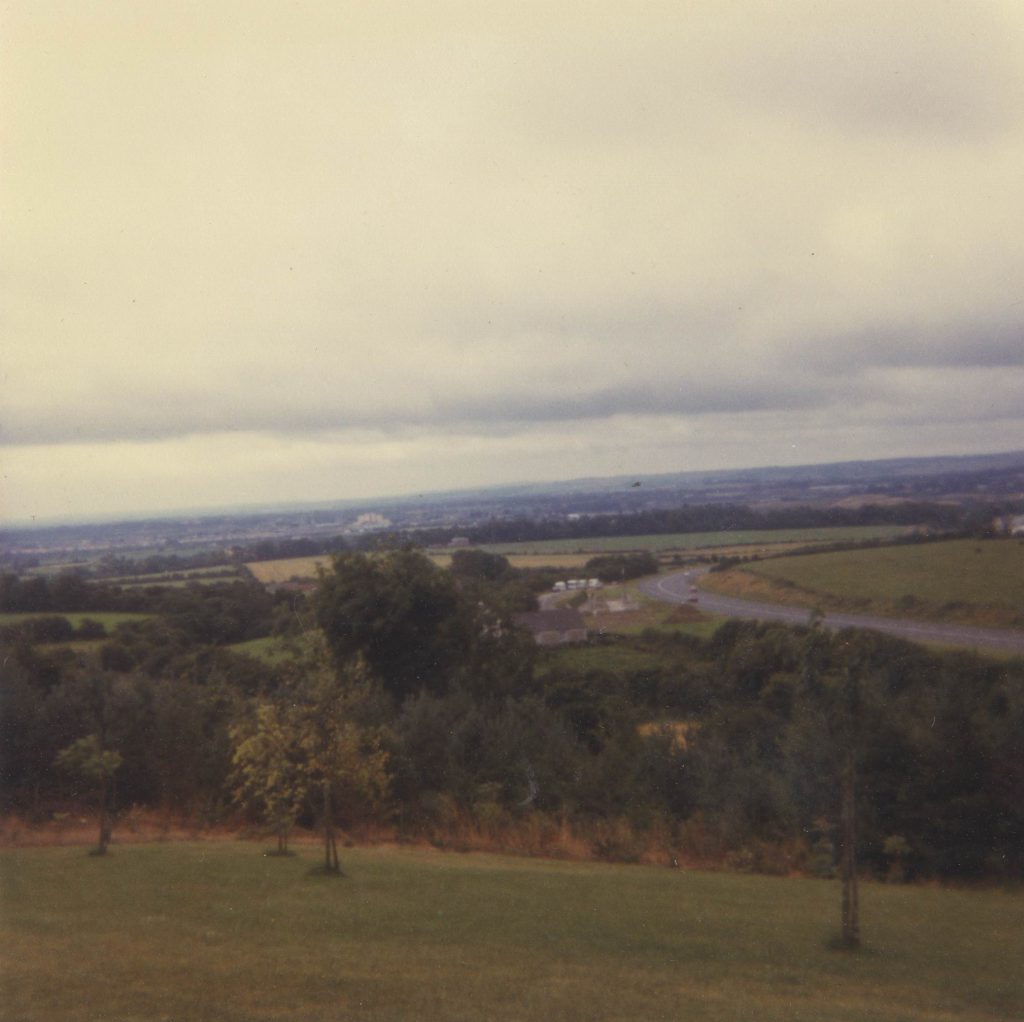
A view from the Boyneside FM site at Tullyesker near Drogheda (photo courtesy of Eddie Caffrey).

By the mid-1980s, Boyneside had established itself as one of the main radio stations in Co. Louth and a successful regional station in its own right, with satellites in Kells, Co. Meath and on the border. Its main AM transmitter on 1305 kHz was heard far and wide throughout the northeast of Ireland and beyond and Boyneside was describing itself as the largest regional radio station in Ireland.

This recording is of the main Boyneside station in Drogheda from 0945-1030 on 19th February 1985. Its features the end of Daire Nelson’s breakfast show, complete with comedy inserts, followed by news headlines at 10 o’clock. The late Dave C (Cunningham) then takes over for the mid-morning slot.

This recording is from the Skywave Tapes Collection. Skywave Radio International broadcast a shortwave station in the 1980s from Baldoyle in northeast Dublin.

Sunday morning on Capital Radio International

Sunday morning on Capital Radio International
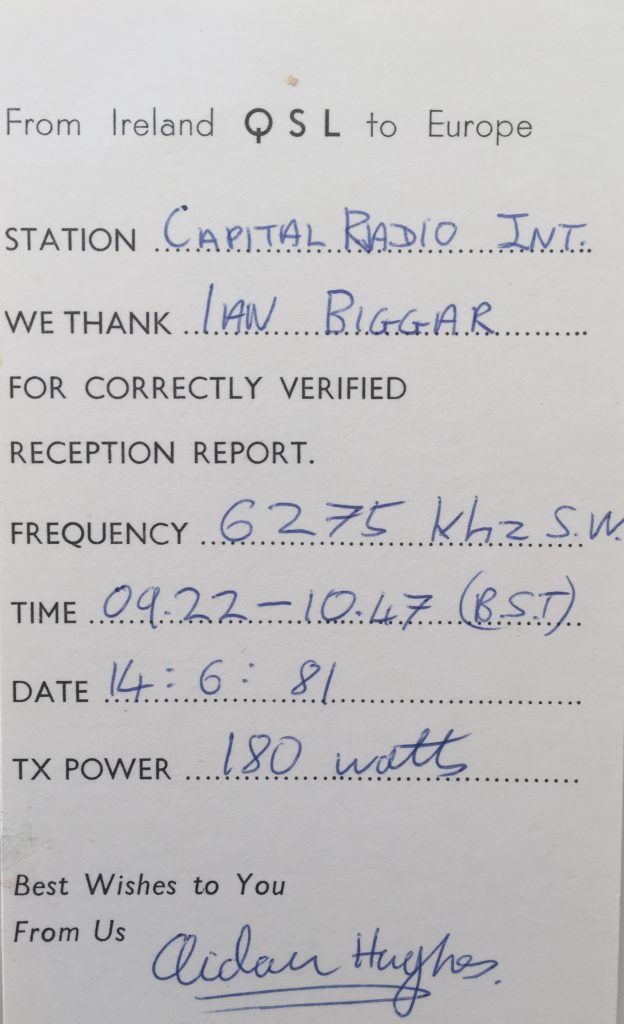
A Capital QSL from 1981 (courtesy of Ian Biggar/DX Archive).

Capital Radio International began broadcasting from Dublin in 1981, one of many shortwave pirates from Ireland during that decade. It broadcast for the most part on 6268 kHz with a strong signal – the QSL above records an output of 180 watts which was well above average for the hobby shortwave stations. Capital Radio sometimes operated from the site of another shortwave pirate Radio Valleri.

Our recording was made from 6268 kHz from 1120-1205 on Sunday 11th August 1985 and features the station operator Aidan Hughes. The signal is indeed strong but over-modulated in places and seems to drift slightly off channel. Capital returned to the air in the early 1990s but came to an end when Aidan Hughes died prematurely.

For more information about the shortwave pirates see the DX Archive and Pirate Memories websites. This recording is from the Skywave Tapes Collection. Skywave Radio International broadcast a shortwave station in the 1980s from Baldoyle in northeast Dublin.

Full recording: Westside Radio International

Full recording: Westside Radio International
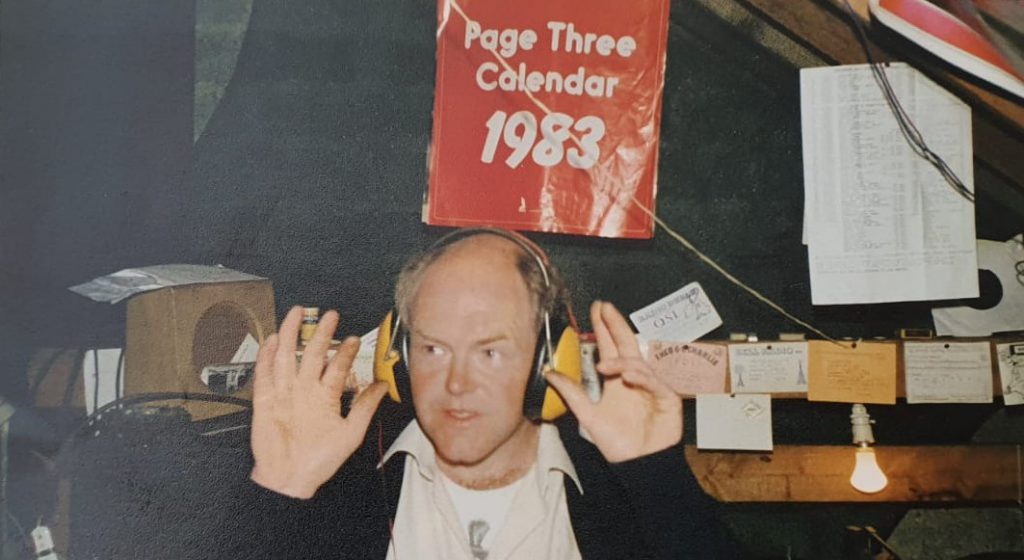
Prince Terry on air in Westside Radio International c. 1987

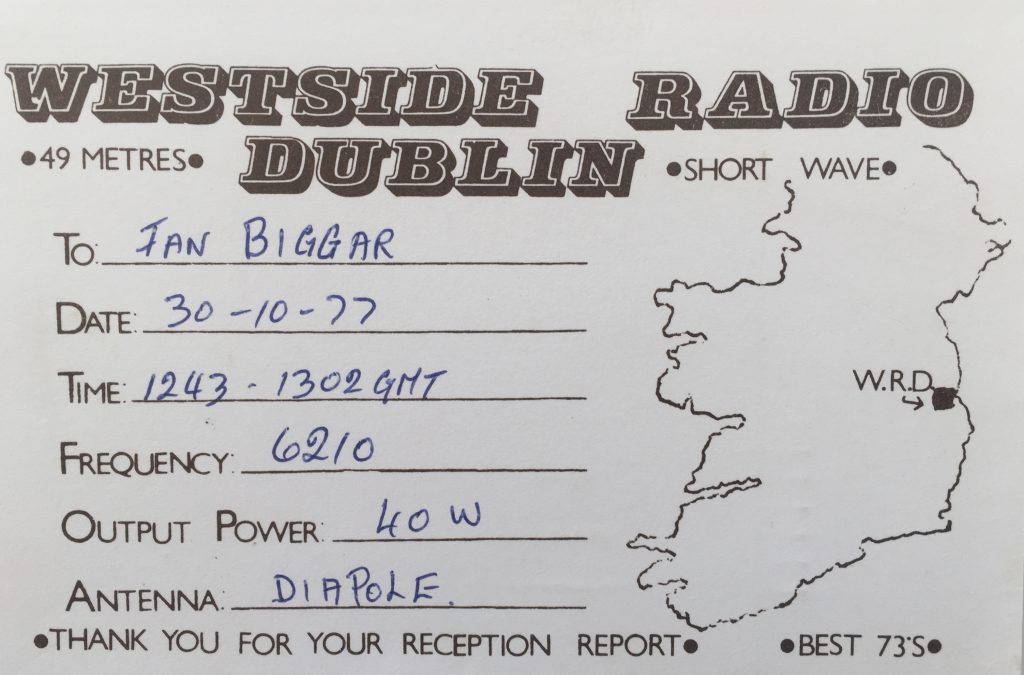
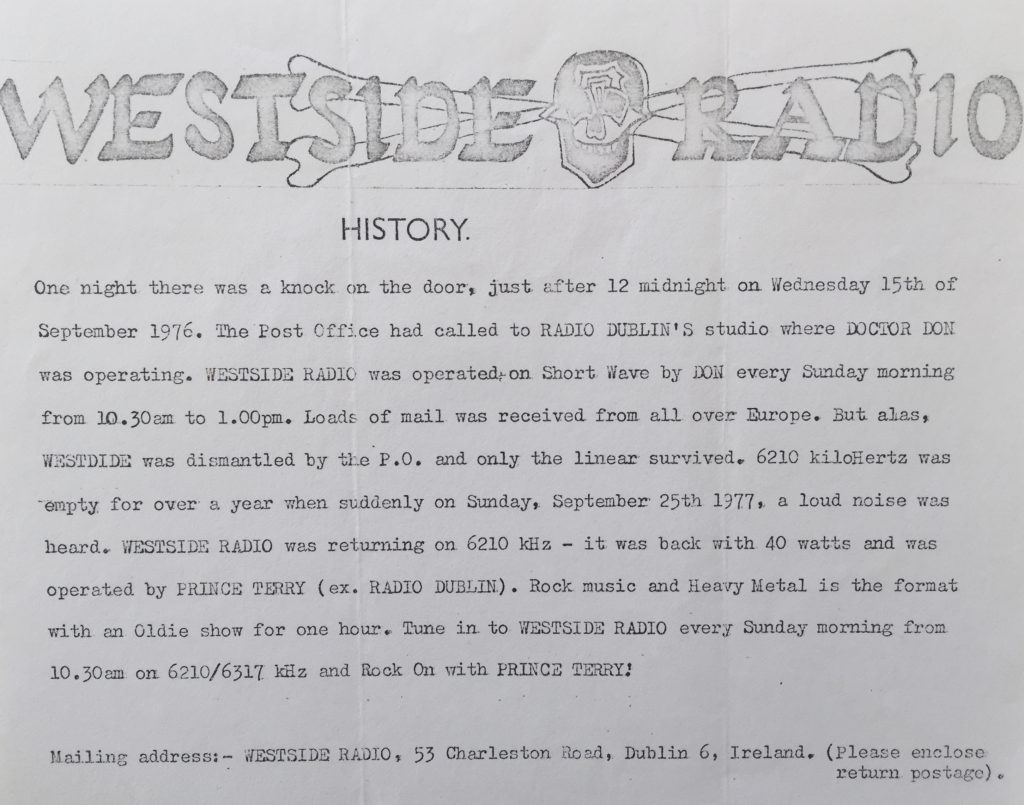
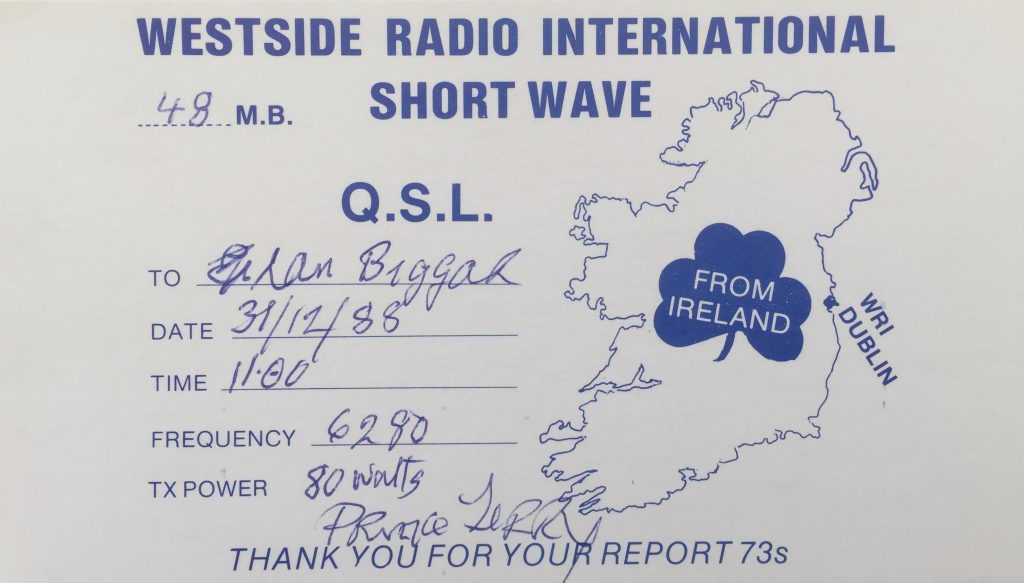
Westside Radio International was one of the longest-running shortwave stations from Dublin in the pirate era. Westside was originally operated by Dr. Don (Don Moore) in 1975 and 1976 at a time when he and Prince Terry (Roger Lloyd) were also involved with Radio Dublin on medium wave. Westside returned to the air on 25th September 1977 on 6210 kHz, this time operated by Prince Terry. It moved to 6280 kHz where it was a permanent feature on Sunday mornings until the end of 1988 when the new radio legislation came into force.

Full recording: Westside Radio International
An early QSL from Westside Radio issued in 1977 (courtesy of Ian Biggar/DX Archive).

Our recording was made on Sunday 21st July 1985 from 1140-1225 and features part of Prince Terry’s FRC programme with his trademark rock music and news about the free radio scene. The programme gives a great sense of pirate radio on both sides of the Irish Sea at the time, delivered through the unique audio experience of shortwave. A panel discussion involving both Prince Terry and Dr. Don can be heard here.

Full recording: Westside Radio International
A leaflet outlining the early history of Westside Radio International (courtesy of Ian Biggar/DX Archive).

For more information about the shortwave pirates see the DX Archive and Pirate Memories websites. This recording is from the Skywave Tapes Collection. Skywave Radio International broadcast a shortwave station in the 1980s from Baldoyle in northeast Dublin.  

Full recording: Westside Radio International
Westside QSL on its last day of operation in 1988 (courtesy of Ian Biggar/DX Archive).