Evening show on alternative free radio service Radioactive

Evening show on alternative free radio service Radioactive
Radioactive banner from its Facebook page.

Radioactive was a free radio experiment broadcasting from Dublin city centre between 1992 and 1996. It was based on the philosophy of media democratisation and resistance to commercial broadcasting expressed in the pamphlet Radio is my Bomb: A DIY Manual for Pirates (1987). Therefore, Radioactive never took commercial advertising income, avoided a format or management and was run democratically by a group of volunteers.

Radioactive was set up on 12th July 1992 in the bedroom of a flat in the north inner city with a limited studio and basic 20-watt transmitter fed into a homemade half-wave dipole erected on the fire escape. After a few days of testing, the station announced itself as Radioactive and said it was welcoming contact from people or groups who wanted to use the airspace. At the start Radioactive only had two DJs broadcasting from 6pm to midnight with a loop tape machine covering the rest of the time. By the end of 1992 about 30 DJs had become involved leading to a fuller live schedule. Reflecting ongoing attempts to suppress pirate radio, raid procedures were developed and distributed to DJs, but Radioactive was never actually raided.

By 1993, the station had set up monthly meetings to discuss policy, develop new ideas and decide how to raise money without advertising commercial products or events, a key policy of Radioactive. Benefit gigs where bands offered their services became an important source of revenue as well as allowing recruitment of new DJs. Another source of income was membership subscriptions paid by DJs themselves, the money generated being used to buy and maintain basic studio and transmission equipment. By summer 1993, as it celebrated its first birthday, Radioactive had a new 100-watt transmitter and a broadcast schedule of 50 DJs from 5pm to 3am 7 days a week, potentially the biggest free radio station in Europe at the time. It had to move premises around this time and lost some of its coverage area due to a lower height for the antenna at the new location. A commemorative website describes the set-up around this time:

Our studio is fairly common of Dublin pirates, a ten channel mixing desk with a sub mixer to handle four extra mics for interviews. We have two turntables for the techno DJs and two CD players for the rock DJs, we also have two cassette decks one capable of recording shows and an FM tuner to monitor the output.

Radioactive had no overt political policy but among those involved were anarchists, socialists, feminists, gay groups and environmentalists. Others just wanted to play their own music, which the station said was a political statement in itself due to the lack of diversity in the licensed radio scene of the 1990s. Radioactive closed down on 12th July 1996, 4 years to the day after it began broadcasting. In a tribute, one of the founders Dónal Greene wrote:

Radioactive was democratically run by the volunteers who took part and in its four years only two members were asked to leave. The station never had a normal approach to running a radio service, and this to some extent worked. It had a policy of no advertising and all funds were raised by membership subscriptions and benefit concerts. This meant that the equipment that the station operated with was constantly in need of repair and the transmitters never gave blanket stereo coverage to Dublin. To me Radioactive was an experiment in free radio, and it many ways it succeeded and equally in many ways it failed, but most of all we had a good time and many great laughs.

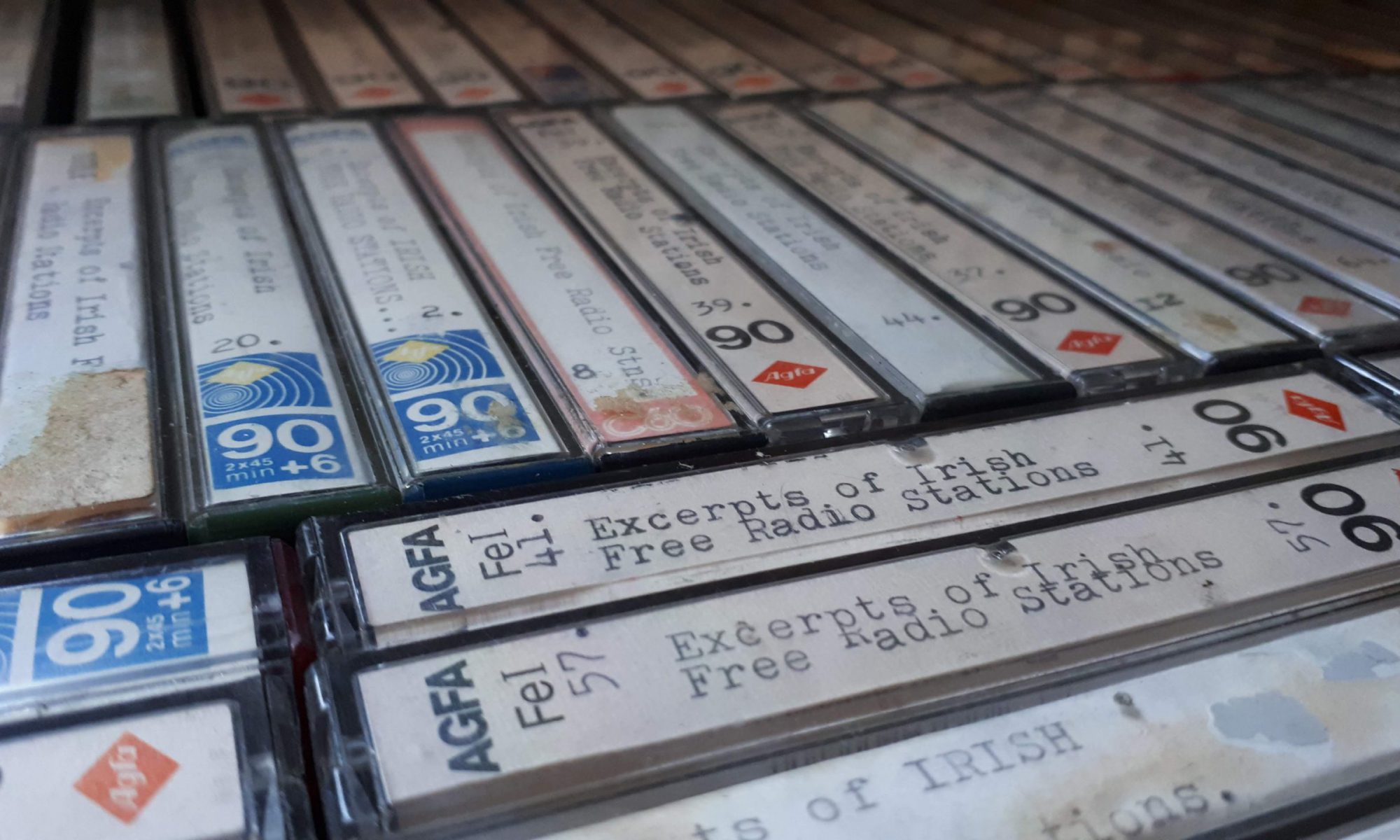
This recording of Radioactive features an evening programme presented by the ‘ABC DJ’. The musical style is eclectic and the presentation style anarchic, as was the norm for the station. The recording was made from 100.9 FM between 2030-2200 on Wednesday 12th January 1994. The DJ also announces a relay on 104.4 FM in Belfast. Audio quality is varied due to basic studio and transmission equipment as well as cassette deterioration over time. Thanks to Ian Biggar for the donation.

View the Radioactive tribute page here and its online station here.

Border series: lunchtime on Radio North

Border series: lunchtime on Radio North
Radio North poster from the early 1990s (courtesy DX Archive).

As was often the case in long-running pirate radio stations, Radio North has seen splits and offshoots in its almost 40 years on air. One such split led to rival station North Atlantic Radio, that went on air in November 1989 and continued for 2 years in direct competition with Radio North. It was not sustainable to keep two similar stations on air in the Inishowen peninsula and Radio North closed down sometime near the end of 1991, leaving North Atlantic unopposed. However, on 31st January 1994, North Atlantic reverted to the original Radio North name and has continued without significant break to the current day.

The recording of a lunchtime show was made in August 1994 and features DJ Wes with requests from both sides of the border and long commercial breaks for businesses in Donegal, Derry and Antrim. The familiar musical diet consists of country and Irish and gospel songs, including one sung by Wes himself and the Radio North anthem with the singing farmer John Watt. The show also includes the Radio North community noticeboard.

The tape was made from 846 kHz on 17th August 1994 between 1400 and 1500. Thanks to Ian Biggar for the donation.

Border series: breakfast on Radio Star Country as heard in Norway

Border series: breakfast on Radio Star Country as heard in Norway
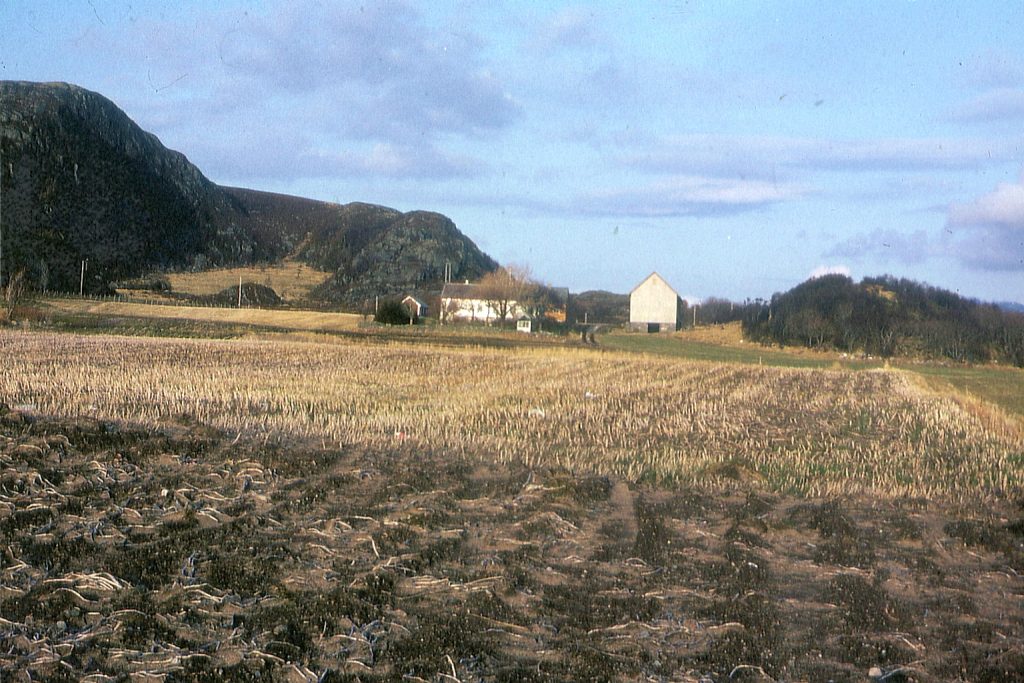
A 1980s photo of where an Irish receiving antenna was built in Bud, Norway (courtesy Svenn Martinsen).

Today we feature another recording of Monaghan station Radio Star Country made on the western coast of Norway. It features continuous music at breakfast time, including a promo is heard for “your own 24-hour a day country music station from Monaghan to wherever you are” but with no commercial breaks. The fact that there was no live DJ in a peak listening slot underlines how Radio Star Country sometimes failed to provide a core schedule in the post-1989 period.

Audio quality is fair at the beginning but deep fading occurs after about 20 minutes. There is some wobble but it is not clear if this was on the station’s side or is due to the degradation of the tape over time. The receiver is retuned to an unidentified UK AM station at the very end. The recording was made in Solsvik, Norway from 981 kHz between 0755 and 0840 on 29th October 1994. The receiver used was a Drake SPR-4 with a 200-metre antenna facing southwest. Thanks to Svenn Martinsen for the donation.

Border series: continuous music on Radio Star Country as heard in Norway

Border series: continuous music on Radio Star Country as heard in Norway
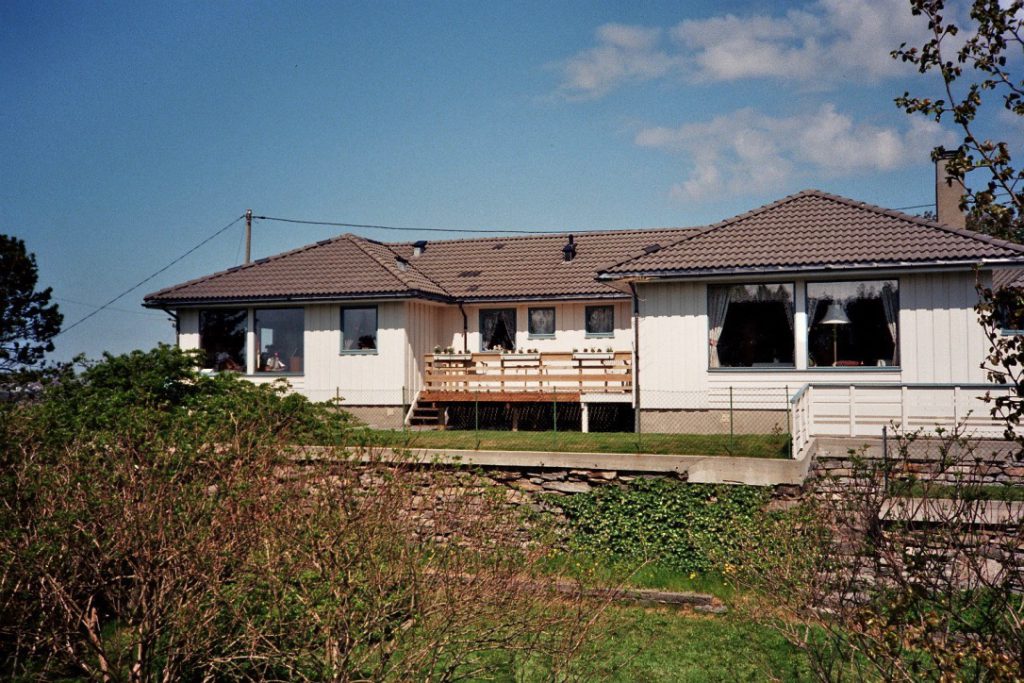
The listening station was located in this house in western Norway (courtesy Svenn Martinsen).

In 1994, Radio Star Country marked six years on air, five of them since the strict new broadcasting regime that was supposed to silence the pirates came into effect. This recording from that year features continuous country music interspersed with station idents. One promo describes Radio Star Country as ‘Your own 24 hour a day country music station from Monaghan to wherever you are’ and indeed thanks to the properties of AM radio propagation, the signal at times travelled well beyond the core listening area along the border and Northern Ireland.

Our recording was made at an unknown time on 14th February 1994 from 981 kHz in Solsvik on the coast of western Norway. The receiver was a Drake SPR-4 with a 200-metre antenna facing southwest. Audio quality is fair at first with fading and co-channel interference later. The recording is kindly donated by Svenn Martinsen.

Border series: Sean Brady on Radio Star Country

Border series: Sean Brady on Radio Star Country
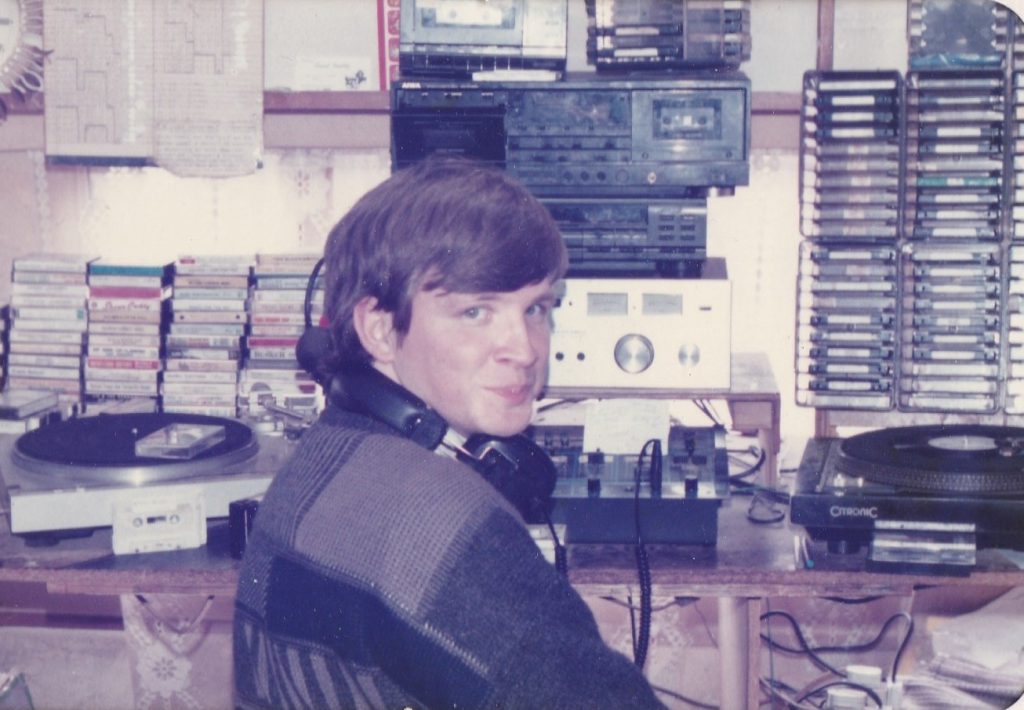
An undated photo of Sean Brady in studio in the early 1990s (courtesy of Sean).

Today’s recording of Radio Star Country features Sean Brady presenting an afternoon show in 1994. With experience on various 1980s pirates in the north Leinster region (Cavan Community Radio and Breffni Radio), Sean later joined Northern Sound Radio, the licensed service for Counties Cavan and Monaghan. He returned to the pirate fold in the form of Radio Star Country, where he spent more than four years. Sean shares his fond memories of that period:

I began hosting shows on Radio Star Country in January 1992, following a stint (May 1990 to December 1991) at Northern Sound. When I was at Northern Sound, Isobel Byrne (RIP), late wife of former Radio Star Country owner, Gerry Byrne, used to listen in and phone me, wondering if I’d like to join Radio Star Country.

When I joined Radio Star Country, the station was broadcasting on 981 kHz from a caravan near Smithboro in County Monaghan, but it did move – I’m not sure when – to Carrigans, Emyvale. I wasn’t informed of the move and drove on a Sunday morning to Smithboro to find the farmyard empty of its radio occupant! The move was related to some sort of family dispute!

I very much enjoyed working for Radio Star Country, as I could play the kind of music I loved, and still do to this day, country music, particularly American country music. I have to admit that station owner Gerry Byrne and I had a few heated arguments as to the amount of American country music I played on-air, but I was adamant that the material I featured was the correct format to adhere to. I spent a lot of time planning my shows, in the pre-internet days, researching country music artists, as I featured them on their respective birthdays. I had a quite extensive country music collection – I still do to this day, although it’s obviously been increased – on CD, vinyl and cassette, and I used to bring at least three carry cases of material with me, along with my handwritten country music notes.

I have to say that, while I was hosting shows on Radio Star Country, between January 1992 and March 1996, sitting in the caravan-based on-air studio, I never thought of, or was fearful of, a raid taking place. Perhaps I was a little naive, but I simply got on with the job in hand, playing the finest selection of country music, which no other radio station in the land was doing. I hosted the afternoon slot between 1.00pm and 6.00pm on Mondays, Tuesdays, Thursdays, Fridays and Sundays, and enjoyed it immensely, even though it involved a car journey of 1 hour and 15 minutes.

Although I departed Radio Star Country in March 1996, I’m so pleased to know that the station is still broadcasting today, but I feel that a move in frequency from 981 kHz should have been undertaken – the frequency, which is adequate for daytime coverage, does tend to suffer from co-channel interference at night. I always thought that 954 kHz would have been a more suitable AM frequency to use, as the medium wave band is now more uncluttered.

This recording of Sean was made on bank holiday Monday 29th August 1994 from 1640-1740. Adverts are from Counties Armagh, Monaghan, Down, Tyrone and Derry and there are plenty of stations idents and jingles, many of which are still heard today. The station was sold on by Gerry Byrne in 1992 and a reference by Sean to the religious programme Showers of Blessings indicates an expansion to content beyond country music alone. Sponsored religious programmes have become increasingly prominent on Radio Star Country but, as Gerry Byrne recalls, listeners remain loyal to the station:

Radio Star Country changed ownership a couple of times and has now a number of religious features and gospel programmes. Over the years, it has had steady staff and a large loyal bunch of listeners, among them the late Big Tom who played Radio Star Country in his shed. I moved to London completely in 1992 even though I had been back and forth and began broadcasting with Spectrum Radio London on a Sunday night and later Saturday afternoon.

Today’s tape was made in Scotland from 981 kHz AM and is courtesy of Ian Biggar.